Host-Microbiota Crosstalk in Ovarian Cancer
Listed as a student presentation by Ms. Kubra Kocak, Ca' Foscari University of Venice, in a Kansai Medical University / Ca' Foscari programme for April 2026 in Osaka.
Ca' Foscari University of Venice
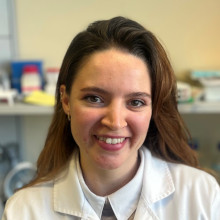
Turkish researcher in Venice, working as a PhD student in bio and nanomaterials with a focus on organoid-bacteria co-culture for cancer treatment and prevention.
Research
Kübra is listed by Ca' Foscari as a PhD student in the doctoral programme Science and Technology of Bio and Nanomaterials. Her stated research topic is “Exploring organoid-bacteria co-culture for cancer treatment and prevention: a multidisciplinary approach.”
Her supervisor is Dr. Sabrina Tamburini, and her academic unit is the Department of Molecular Sciences and Nanosystems. Ca' Foscari's Bio and Nanotechnology Lab also lists her among its PhD students.
Her public professional profile describes work on the interaction between the microbiome and ovarian cancer using bacterial isolates, human organoids, and cell lines. A public LinkedIn post also says she completed an internship at Karolinska Institutet, working on bacteria and organoid co-culture.
Research record
Public publication indexes connect Kübra's earlier work to enzyme activity, bacterial isolation, wastewater treatment, and biodegradation. Her current doctoral work moves that microbiology background into host-microbiota questions in cancer.
Listed as a student presentation by Ms. Kubra Kocak, Ca' Foscari University of Venice, in a Kansai Medical University / Ca' Foscari programme for April 2026 in Osaka.
Co-authored article in Environmental Microbiology Reports on response-surface optimisation and dye decolourisation; PubMed and Wiley list Kubra Kocak among the authors.
Co-authored IJABES article on anaerobic treatability studies of sugar industry wastewater in a batch reactor.
Co-authored article in the Brazilian Journal of Microbiology on laccase activity from treatment sludge of textile industry factories.
PhD student at Ca' Foscari University of Venice, connected to the Department of Molecular Sciences and Nanosystems.
Listed as tutor for Microbiology in Ca' Foscari's specialist tutoring pages, under Prof. Sabrina Tamburini.
Public academic indexes list profiles for Kubra Kocak / Kübra Öztat, including ResearchGate and SciProfiles. Turkish thesis records also appear under the Öztat surname.
Her public researcher profile lists methods and skills including PCR, cell culture, DNA/RNA extraction, Western blot analysis, immunofluorescence, and bacterial cell culture.
A public LinkedIn post says she completed a term at Karolinska Institutet working on bacteria and organoid co-culture.
Turkish thesis records under Kübra Öztat describe postgraduate work on laccase activity in bacteria isolated from paper and textile industry treatment sludge.
A short biography
The public record frames Kübra as a Turkish scientist building her doctoral work in Venice. Her current research sits at the intersection of microbiology, organoid models, cancer prevention, and biomaterials. It is technical work, but the human goal is direct: better ways to understand and intervene in disease.
Beyond the lab
Her public records connect a Turkish academic path with a current life and doctoral project in Venice, at Ca' Foscari University.
Her public professional profile describes a background in Molecular Biology and Genetics before the current PhD in bio and nanomaterials.
LinkedIn lists a volunteer role with RIAS Wildlife Recovery Center, a small non-academic signal that fits a life-sciences profile without turning private.
Public posts and programmes place her work in international settings, including Karolinska Institutet in Sweden and a Ca' Foscari / Kansai Medical University programme in Japan.
Verified public sources